
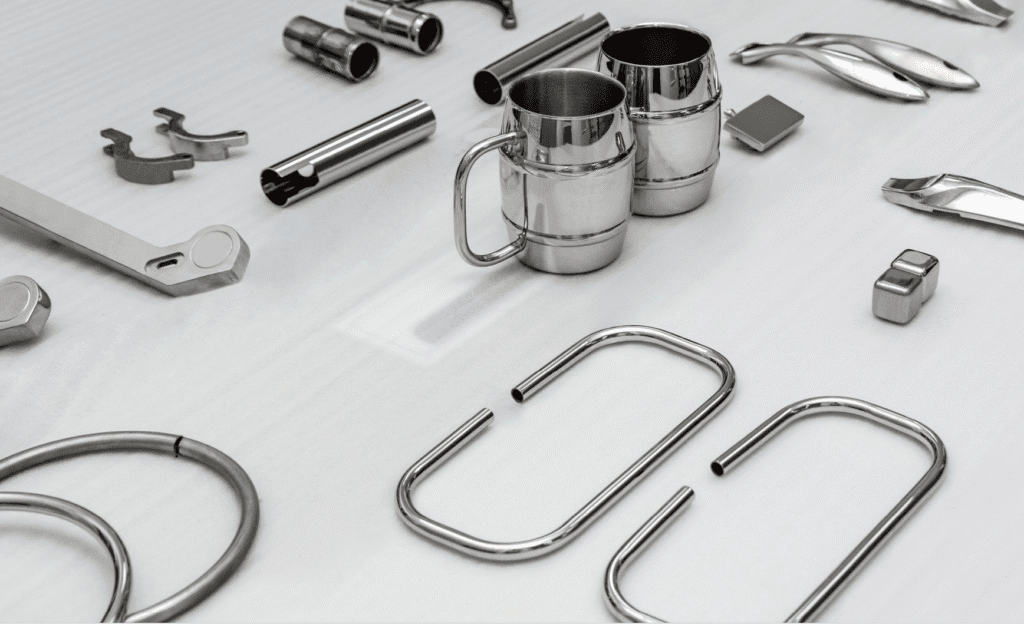
A Complete Guide to Polishing Equipment for Metal Polishing Applications
Introduction
In modern manufacturing, surface finishing is no longer a secondary process—it is a critical factor that directly affects product quality, performance, and market competitiveness. Among various finishing techniques, polishing plays a decisive role, especially in industries that rely heavily on metal polishing such as automotive, electronics, hardware, medical devices, and industrial components.
As production volumes increase and quality standards become more stringent, manufacturers are turning away from labor-intensive manual methods and adopting advanced polishing equipment and polishing machinery. This article provides a comprehensive guide to polishing equipment for metal polishing applications, with a strong focus on industrial production, automated polishing, and low-cost polishing strategies optimized for Google SEO.
What Is Polishing Equipment?
Polishing equipment refers to machines and systems designed to improve the surface finish of metal parts through controlled mechanical action. By using abrasives, polishing compounds, and regulated motion, polishing machinery removes surface defects, improves smoothness, and enhances the visual and functional quality of metal components.
In industrial environments, polishing equipment replaces or supplements traditional manual polishing to achieve higher efficiency, consistency, and scalability.
Common Types of Polishing Equipment for Metal Polishing
Different metal polishing applications require different types of polishing machinery. Below are the most widely used categories in industrial production.
1. Manual and Semi-Automatic Polishing Machines
These machines assist operators by providing stable rotation speed and pressure control while still requiring human operation. They are often used in small workshops or low-volume production environments.
Advantages:
Low initial investment
Flexible operation
Suitable for customized metal polishing tasks
Limitations:
High labor dependency
Inconsistent polishing quality
Limited scalability for industrial production
2. Automatic Polishing Equipment
Automatic polishing equipment performs predefined polishing operations with minimal human intervention. These systems are ideal for repetitive metal polishing tasks and medium-to-high volume production.
Key Features:
Programmable polishing parameters
Stable and repeatable surface quality
Reduced labor costs
Automatic polishing equipment is widely used in industrial production environments seeking a balance between flexibility and efficiency.
3. Robotic and Automated Polishing Machinery
Robotic polishing systems represent the most advanced form of automated polishing. Using industrial robots, sensors, and intelligent control systems, these machines can handle complex geometries and demanding surface requirements.
Benefits of Robotic Polishing Machinery:
High precision and consistency
Excellent adaptability to complex metal parts
Significant reduction in labor costs
Ideal for large-scale metal polishing
For manufacturers aiming for low-cost polishing over the long term, robotic polishing machinery offers strong return on investment.
Key Applications of Polishing Equipment in Metal Polishing
Polishing equipment is essential across a wide range of metal polishing applications:
Stainless steel polishing for household appliances and architectural components
Aluminum polishing for automotive and aerospace parts
Brass and copper polishing for decorative and electrical components
Precision metal polishing for medical and electronic devices
In each of these applications, polishing machinery ensures consistent surface quality and supports standardized industrial production.
Advantages of Using Polishing Equipment in Industrial Production
1. Improved Efficiency
Compared to manual polishing, polishing equipment significantly increases throughput. Machines can operate continuously with stable performance, making them ideal for high-volume metal polishing.
2. Consistent Polishing Quality
Automated polishing equipment maintains precise control over speed, pressure, and polishing time. This consistency is essential for industries with strict quality standards.
3. Reduced Production Costs
Although polishing machinery requires initial investment, it reduces long-term expenses by lowering labor costs, minimizing rework, and improving yield. This makes it a reliable low-cost polishing solution in large-scale production.
4. Enhanced Workplace Safety
By reducing manual intervention, polishing equipment minimizes worker exposure to dust, vibration, and repetitive motion injuries, supporting safer industrial environments.
How to Choose the Right Polishing Equipment
Selecting the right polishing equipment depends on several key factors:
Material type: stainless steel, aluminum, brass, or other metals
Surface finish requirements: mirror finish, matte finish, or functional polishing
Production volume: small batch or mass production
Level of automation: manual, automatic, or robotic polishing
Cost considerations: initial investment versus long-term operating costs
A well-chosen polishing machinery solution aligns with both current production needs and future expansion plans.
Polishing Equipment and Low-Cost Polishing Strategies
Achieving low-cost polishing does not mean sacrificing quality. Modern polishing equipment enables manufacturers to optimize abrasive usage, reduce scrap rates, and improve production efficiency.
Automated polishing systems, in particular, offer predictable costs per unit, making budgeting and cost control more manageable in industrial production environments.
Future Trends in Polishing Equipment
The future of polishing equipment is closely tied to automation and smart manufacturing. Advanced polishing machinery now integrates:
Intelligent sensors for real-time feedback
Adaptive control systems for variable surfaces
Robotic arms for complex metal polishing tasks
Data integration for production optimization
As these technologies mature, automated polishing will become the standard approach for metal polishing in modern industrial production.
Conclusion
Polishing equipment has become an indispensable part of modern metal polishing applications. Compared to traditional manual methods, advanced polishing machinery offers superior efficiency, consistent quality, enhanced safety, and long-term cost advantages.
For manufacturers focused on industrial production, automated polishing equipment provides a scalable and low-cost solution that meets the demands of today’s competitive manufacturing landscape. By selecting the right polishing equipment and embracing automation, companies can significantly improve their metal polishing capabilities and secure sustainable growth in the global market.