
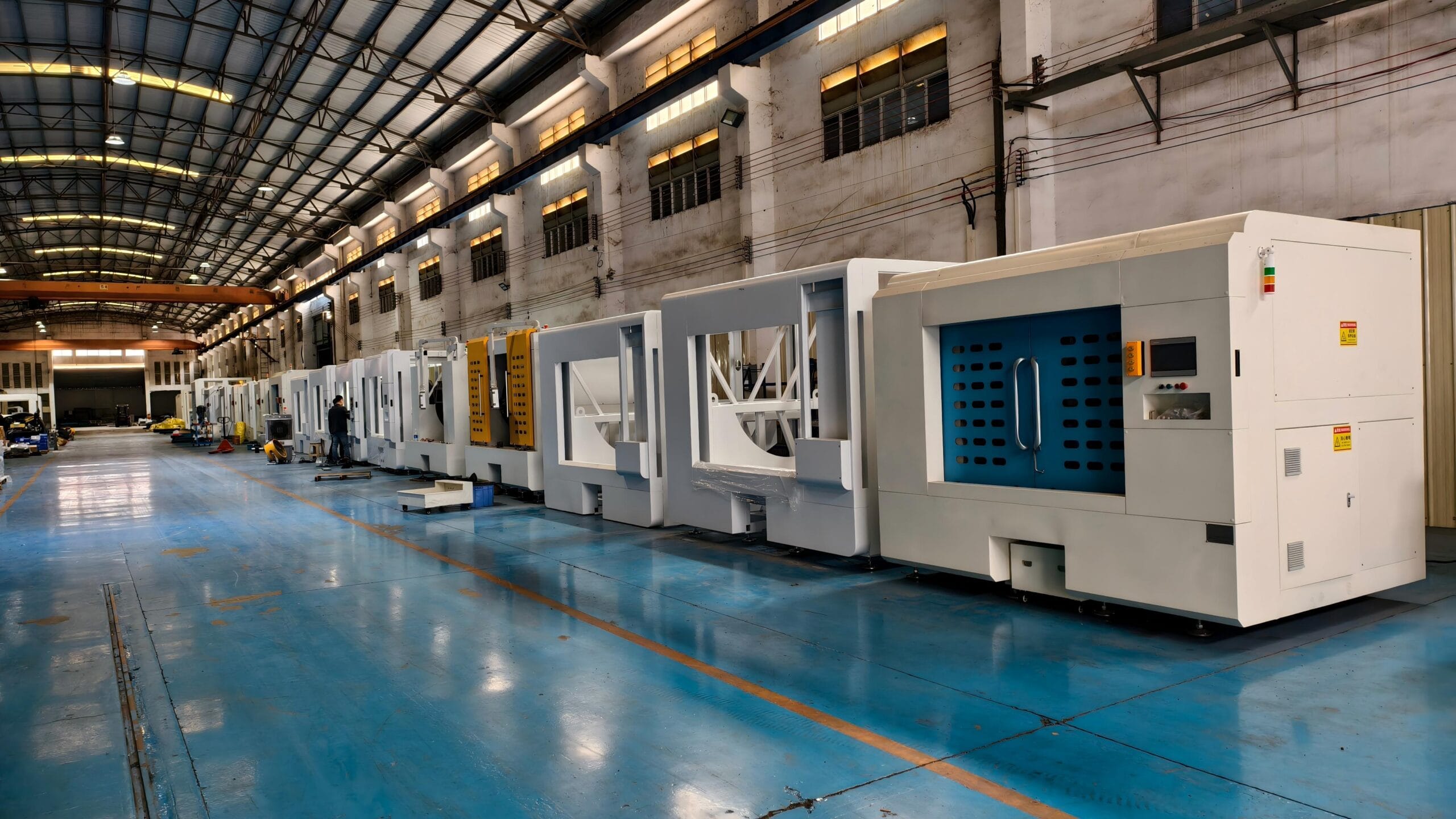
In Industrial Production, How to Choose the Right Polishing Equipment?
Traditional Polishing Equipment vs. Roller Polishing Machinery
Surface finishing plays a critical role in industrial production, particularly in industries such as metal fabrication, automotive components, hardware manufacturing, and industrial parts processing. Polishing quality directly affects not only product appearance but also dimensional accuracy, surface performance, and the reliability of subsequent processes such as coating or assembly.
When selecting polishing equipment, manufacturers typically compare traditional polishing equipment with roller polishing machinery. Understanding the strengths and limitations of each solution is essential for making the right investment decision.
Key Considerations When Selecting Polishing Equipment
Before comparing specific machine types, manufacturers should evaluate several core factors:
Production volume and throughput requirements
Labor availability and long-term operating costs
Product geometry and surface complexity
Consistency and repeatability of polishing quality
Environmental compliance and regulatory requirements
Flexibility for future product variations
These considerations provide a clear framework for evaluating different polishing technologies.
Traditional Polishing Equipment: Characteristics and Constraints
Traditional polishing equipment generally includes manual or semi-automatic machines such as belt polishers, buffing wheels, and handheld polishing tools. These systems are still widely used in small workshops and low-volume production environments.
Advantages of Traditional Polishing Equipment
Low initial investment, making it accessible for small manufacturers
Simple setup and operation for basic polishing tasks
High flexibility for custom or low-batch products
Limitations in Industrial Production
As production scales up, traditional polishing equipment often presents operational challenges:
Limited throughput, as parts are typically processed one at a time
High dependence on skilled labor, leading to inconsistent results
Variable surface quality due to operator differences
Rising labor costs, which reduce cost competitiveness
These factors make traditional polishing less suitable for standardized, high-volume industrial production.
Roller Polishing Machinery: Designed for Modern Manufacturing
Roller polishing machinery is engineered for batch processing and continuous production environments. Parts are polished through controlled mechanical motion using rollers, abrasives, and adjustable processing parameters.
1. High Batch Capacity and Lower Cost per Unit
Roller polishing machinery can process a large number of parts in a single polishing cycle.
Significantly higher throughput compared to manual methods
Reduced labor involvement per unit
Lower overall polishing cost at scale
This makes roller polishing particularly attractive for manufacturers with stable, high-volume orders.
2. Capability to Polish Irregular and Complex-Shaped Parts
Many industrial components feature non-standard geometries that are difficult to polish manually with consistent results.
Roller polishing machinery is well suited for:
Curved, angled, or asymmetrical components
Parts with multiple surface transitions
Products requiring uniform surface treatment
This capability reduces the need for secondary manual finishing and improves overall production consistency.
3. Strong Compatibility and Adjustable Configuration
Roller polishing systems are designed with flexibility in mind.
Adjustable working dimensions to accommodate different part sizes
Configurable polishing parameters for various materials and surface requirements
Compatibility with multiple product types on the same machine
This adaptability allows manufacturers to respond efficiently to changing production demands.
4. Independent Polishing Compartments to Prevent Part Collision
A key advantage of roller polishing machinery is its independent polishing space design.
Each part is processed within a controlled polishing area
Parts do not collide with one another during operation
The risk of surface damage, scratches, or deformation is significantly reduced
This feature is particularly important for precision components and products with strict surface quality requirements.
5. Use of Environmentally Friendly Consumables
Modern roller polishing machinery is increasingly designed to support environmentally compliant production.
Compatible with eco-friendly abrasives and polishing media
Reduced dust, waste, and chemical emissions
Easier compliance with environmental regulations and government standards
For manufacturers operating under stricter environmental policies, this is an important long-term advantage.
Traditional Polishing Equipment vs. Roller Polishing Machinery
| Aspect | Traditional Polishing Equipment | Roller Polishing Machinery |
|---|---|---|
| Production volume | Low to medium | Medium to high |
| Labor dependency | High | Low |
| Polishing consistency | Operator-dependent | Highly consistent |
| Complex shape capability | Limited | Strong |
| Risk of part damage | Higher (manual handling) | Low (independent compartments) |
| Environmental compliance | Limited | Strong |
| Unit cost at scale | High | Low |
When Is Roller Polishing Machinery the Better Choice?
Roller polishing machinery is particularly suitable when:
Production volumes are large or continuously increasing
Consistent surface quality is a critical requirement
Products include irregular or complex geometries
Labor costs or workforce availability are ongoing challenges
Environmental compliance is a growing concern
For manufacturers transitioning from manual processes to automation, roller polishing machinery offers a practical and scalable solution.
Conclusion
Selecting the right polishing equipment is a strategic decision that impacts productivity, cost control, quality consistency, and regulatory compliance. While traditional polishing equipment remains useful for small-scale or customized applications, it increasingly struggles to meet the demands of modern industrial production.
Roller polishing machinery provides clear advantages in efficiency, surface protection, adaptability, and environmental compliance, making it a strong choice for manufacturers seeking long-term operational stability and competitiveness.