
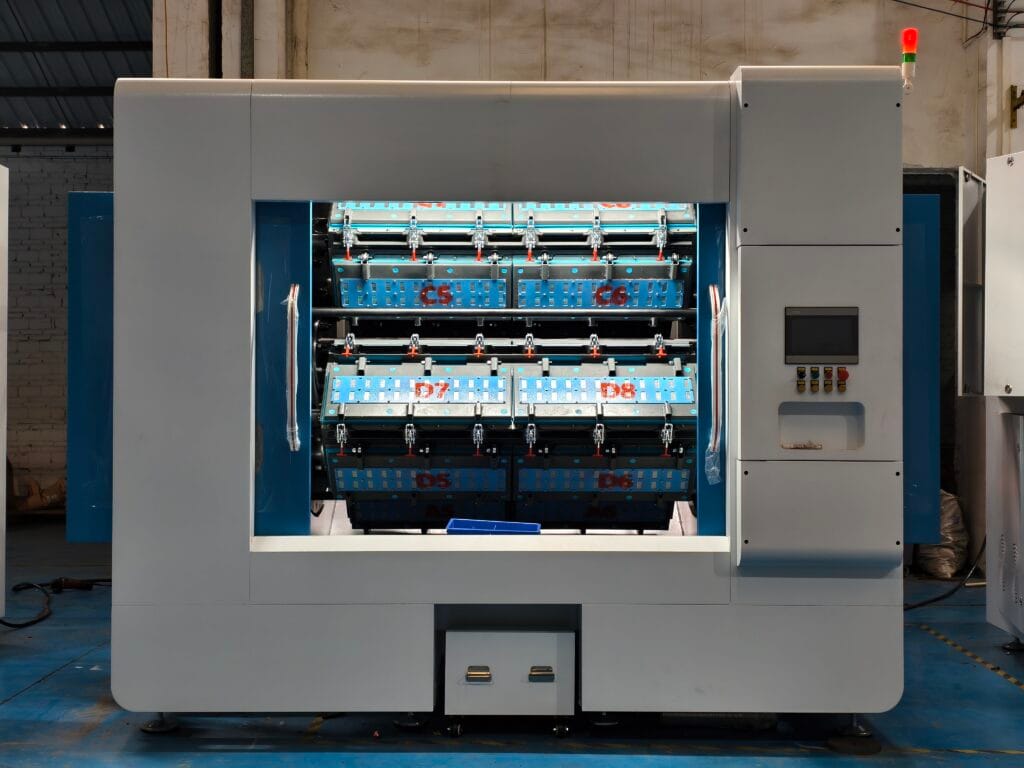
Polishing Machinery Explained: How Modern Polishing Equipment Improves Industrial Production
Introduction
In today’s highly competitive manufacturing environment, surface quality has become a decisive factor in product performance, reliability, and market value. As industries move toward higher standards of precision and efficiency, polishing machinery plays an increasingly important role in modern industrial production. Traditional manual polishing methods are gradually being replaced by advanced polishing equipment designed to deliver consistent results, lower costs, and scalable output.
This article explains what polishing machinery is, how it works, and why modern polishing equipment is essential for efficient metal polishing, low-cost polishing, and fully automated polishing in industrial manufacturing.
What Is Polishing Machinery?
Polishing machinery refers to mechanical systems specifically engineered to improve the surface finish of metal components through controlled abrasive processes. By regulating speed, pressure, motion, and polishing media, these machines remove surface defects such as scratches, oxidation, and tool marks.
Unlike manual polishing, polishing machinery operates under standardized parameters, making it ideal for industrial production environments where consistency and repeatability are critical. Modern polishing equipment can be standalone machines or fully integrated into automated production lines.
The Evolution from Manual Polishing to Mechanical Polishing
Traditional polishing relies heavily on skilled labor and manual tools. While this approach offers flexibility, it also introduces several limitations:
Inconsistent polishing quality
High labor dependency
Low production efficiency
Difficulty in scaling output
Mechanical polishing addresses these challenges by using automated systems to perform repetitive and precise polishing operations. As a result, polishing machinery has become a core technology in industries focused on high-volume metal polishing and standardized manufacturing.
Types of Modern Polishing Equipment
Different industrial applications require different types of polishing machinery. The most common categories include:
1. Automatic Polishing Machines
Automatic polishing machines are programmed to perform fixed polishing routines. They are suitable for parts with consistent shapes and surface requirements.
Key advantages:
Stable polishing quality
Reduced labor costs
Improved production efficiency
These machines are widely used in medium-to-large scale industrial production.
2. CNC Polishing Machinery
CNC polishing equipment allows precise control over polishing paths and parameters. It is ideal for complex metal parts that require high surface accuracy.
Applications include:
Precision metal components
Automotive and aerospace parts
High-end hardware products
3. Robotic and Automated Polishing Systems
Robotic polishing represents the most advanced form of automated polishing. Equipped with sensors and intelligent control systems, robotic polishing machinery can adapt to variations in part geometry and surface conditions.
Benefits of robotic polishing equipment:
Exceptional consistency in metal polishing
Capability to handle complex shapes
Long-term low-cost polishing through labor reduction
How Polishing Machinery Improves Industrial Production
1. Increased Production Efficiency
Modern polishing equipment can operate continuously with minimal downtime. Automated polishing processes significantly reduce cycle times compared to manual methods, allowing manufacturers to increase throughput without compromising quality.
2. Consistent and Repeatable Quality
Polishing machinery eliminates human variability by maintaining constant polishing parameters. This ensures uniform surface finishes across large production batches, which is essential for industries with strict quality standards.
3. Lower Long-Term Production Costs
Although polishing machinery requires an initial investment, it delivers substantial cost savings over time. Reduced labor requirements, lower scrap rates, and minimized rework contribute to effective low-cost polishing in industrial production.
Polishing Machinery in Metal Polishing Applications
Modern polishing equipment is widely used across various metal polishing applications, including:
Stainless steel polishing for appliances and architectural components
Aluminum polishing for automotive and aerospace industries
Brass and copper polishing for decorative and electrical parts
Precision metal polishing for medical and electronic devices
In all these applications, polishing machinery ensures consistent surface quality and supports standardized industrial workflows.
Automation and the Future of Polishing Machinery
Automation is reshaping the future of polishing technology. Advanced polishing equipment now integrates:
Real-time sensors for surface detection
Adaptive control systems for variable polishing conditions
Robotic arms for complex metal polishing tasks
Data connectivity for production monitoring and optimization
As manufacturers pursue smart factories and Industry 4.0 initiatives, automated polishing will become a standard component of modern industrial production.
Environmental and Safety Benefits
Polishing machinery improves workplace safety by reducing manual exposure to dust, noise, and vibration. Automated systems also optimize abrasive usage, reducing waste and supporting environmentally responsible manufacturing practices.
These advantages make modern polishing equipment a sustainable choice for long-term industrial development.
Conclusion
Polishing machinery is no longer optional in modern manufacturing—it is a strategic investment that directly impacts productivity, quality, and cost control. Compared to traditional manual polishing, modern polishing equipment delivers superior efficiency, consistent metal polishing results, enhanced safety, and scalable production capacity.
For manufacturers focused on industrial production, low-cost polishing, and automation, adopting advanced polishing machinery is a decisive step toward long-term competitiveness and sustainable growth.