
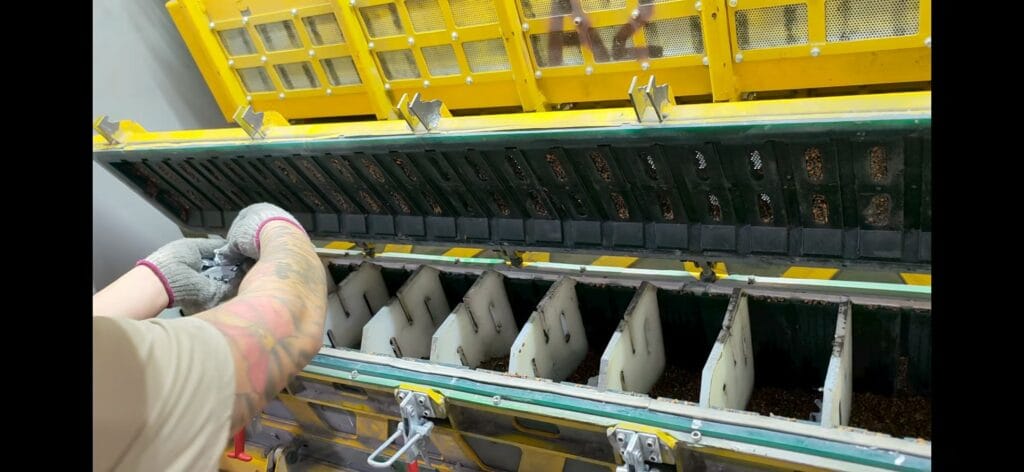
Why Polishing Machinery Is Essential for Modern Manufacturing Automation
Introduction
Manufacturing automation has become a defining trend across global industries. As factories transition toward smart production systems and Industry 4.0, surface finishing processes must also evolve to meet higher standards of efficiency, consistency, and scalability. Among these processes, polishing plays a critical role in determining product quality and functional performance. As a result, polishing machinery has emerged as an essential component of modern manufacturing automation.
This article explains why advanced polishing equipment is no longer optional in automated factories and how automated polishing supports efficient, low-cost polishing and high-quality metal polishing in industrial production environments.
The Role of Polishing in Automated Manufacturing
In automated manufacturing systems, each production step must be predictable, repeatable, and compatible with machine-controlled workflows. Traditional manual polishing, which relies heavily on operator skill, does not align well with automated production lines.
Polishing machinery, by contrast, delivers standardized surface finishing through controlled mechanical processes. By integrating polishing equipment into automated manufacturing lines, manufacturers can ensure consistent surface quality while maintaining uninterrupted production flow.
Limitations of Manual Polishing in Automation-Oriented Factories
Manual polishing presents several challenges in automated environments:
Inconsistent surface finish due to operator variability
Difficulty synchronizing manual polishing with automated upstream and downstream processes
High labor dependency and rising labor costs
Limited scalability for industrial production
These limitations make manual polishing a weak link in otherwise automated manufacturing systems.
How Polishing Machinery Enables Manufacturing Automation
1. Process Standardization and Repeatability
Modern polishing machinery operates under predefined parameters such as speed, pressure, and polishing time. This ensures repeatable results that align with automated quality control systems, making polishing compatible with smart manufacturing requirements.
2. Seamless Integration into Production Lines
Advanced polishing equipment can be integrated with conveyors, robotic arms, CNC machines, and inspection systems. This integration allows polishing to become a continuous part of the automated production process rather than a separate manual step.
3. Support for Automated Metal Polishing
Automated polishing systems are particularly effective in metal polishing, where uniform surface finishes are essential. Polishing machinery ensures consistent results across large production batches, supporting standardized industrial output.
Polishing Machinery and Low-Cost Manufacturing Automation
One of the primary goals of manufacturing automation is cost reduction. While polishing machinery requires upfront investment, it significantly reduces long-term operating costs by:
Minimizing labor requirements
Reducing rework and scrap rates
Increasing production throughput
Ensuring predictable per-unit polishing costs
From a lifecycle cost perspective, polishing machinery is a highly effective solution for achieving low-cost polishing in automated industrial production.
Applications of Polishing Machinery in Automated Production
Polishing machinery is widely used in automated manufacturing across various industries, including:
Automotive manufacturing for polished metal components
Electronics production requiring precision metal polishing
Hardware and appliance manufacturing
Medical device production with strict surface quality standards
In each application, polishing equipment enhances automation by delivering reliable and consistent surface finishing.
Polishing Machinery and Smart Manufacturing Technologies
As manufacturing moves toward smart factories, polishing machinery is increasingly integrated with advanced technologies such as:
Sensors for real-time surface monitoring
Adaptive control systems that adjust polishing parameters automatically
Robotics for handling complex metal parts
Data systems for process tracking and optimization
These technologies enable automated polishing to operate as an intelligent, data-driven process within modern manufacturing automation frameworks.
Environmental and Safety Advantages
Polishing machinery contributes to safer and more sustainable automated manufacturing by reducing worker exposure to dust, noise, and repetitive motion. Automated systems also optimize abrasive usage, lowering material waste and environmental impact.
These benefits align with global manufacturing trends toward sustainability and regulatory compliance.
Conclusion
Manufacturing automation requires every production process to be efficient, consistent, and scalable. Polishing machinery fulfills these requirements by transforming polishing from a labor-intensive task into a standardized, automated operation.
For manufacturers pursuing advanced automation, polishing equipment is essential for achieving consistent metal polishing, reducing long-term costs, and maintaining competitive industrial production. As automation continues to reshape manufacturing, polishing machinery will remain a foundational technology in modern automated factories.